Showing posts with label Indian Writers. Show all posts

Friday, October 21, 2011

NEVER USE THE "J****H" WORD...


Its said that "time never remains the same". Well after so many years I got to know what the politicians really need to fear about(other than elections). Its the "J" word. The J for Jaswant's farce had shown how dangerous the J for Jinnah word can be for a politician. Like the Advani did it 5 yrs before, Jaswant singh favouring the founder of Pakistan gave him a nasty blow by his party and the complete society to all the respect he has earned in his 3 decades. From now onwards beware politicians(especially BJP's) before usin the "J" word because you do live in an independent country but the RTI acts are not for you. I mean to say who the hell are you express your thoughts. You dont have any right to do so even if you are right. And if you do so, you will face the same consequence as faced by our ex- defence, finance and external affairs minister Mr Jaswant Singh.

You might be wondering what I really want to say. The scenario of Jaswant singh supporting Jinnah as a more secular person may seem as an insult to the citizens of our country and its independent "first" ministers, but for me the insult is made by the society to the person who kept his views thinking that he is living in a self dependent country. I dont understand what the political books say but I am a juvenile guy and think with this juvenile brain only.All people said a lot to him, he was thrown out from his party, numerous strikes were held, all these thing really hurts a lot rather than Jaswant backing Jinnah. I may be speaking something jabberwocky here but I think I am right may be not fully but upto some extent.

Lets get ourselves into the history otself. Nobody knows who was responsible for the partition which lead to the massive holocaust but completely blaming one person doesnt seem good. If a deep study is done then the english wanted to have the partition to get home something good from their last days. Our own ministers in one way or the other supported the partion. The proposal of Gandhiji to let Jinnah make his own cabinet was not at all given a thought because it would have been a loss to other leaders. Our first prime minister had ignited and was supporting the partition in the punjab region much before these things came into screens. So collectively it was a complete political nuinsance that led to the partition. Hence excoriating Jaswant singh because he felt Jinnah to be right is hardly right. N the person doing these must better get himself into the pages of history and come out with reasons for him to be right.

May be I am wrong but I feel looking everything in a political view is in no way correct. In one hand we want to improve our relationship with Pakistan but on the other hand are impuging on their politicians. Untill now I had thought that I am in an independent country and I can express myself freely but very hard to know that I am wrong.... Feeling sorry for Jaswant singh

Long live India and its citizens.

Saturday, August 20, 2011

Hasrat Jaipuri

Born On: April 15, 1922
Born In: Jaipur, Rajasthan
Died On: September 17, 1999
Occupation: Poet and Bollywood lyricist
Nationality: Indian

Hasrat Jaipuri is one of those celebrated poets who have gone down as immortal in the history of Hindi film songs. A poet who composed lines in Urdu, Persian and Hindi, he went on to become one of the most popular lyricists that the Hindi film industry in India has ever seen. His poetry and film compositions reflected an amalgamation of both Hindi and Urdu. Born in a Muslim family of Rajasthan in India, poetry was a part of Hasrat Jaipuri's life from the early years of his childhood. Once a bus conductor by profession, little did the world know then that there was so much talent hidden within Hasrat Jaipuri, who may be referred to as a 'shayar' in Indian society.

Life
Hasrat Jaipuri was born as Iqbal Husain in a Muslim family of Rajasthan on April 15, 1922. Iqbal spent his entire childhood in the city of his birth, Jaipur, before shifting to Bombay where he received the best rewards for his talent of poem and song writing. Iqbal Husain was educated in only English language during the initial years of his schooling. It was later that Iqbal Husain received the title of Hasrat Jaipuri and also started his education in Urdu and Persian languages. Hasrat Jaipuri's grandfather Fida Husain was his chief tutor for both the languages. By this time, Hasrat Jaipuri was already a young man of 20. He not only learnt the two languages of Urdu and Persian, he also composed several verses in both languages. Many of his verses were composed for the love of his life Radha, a Hindu girl residing in Jaipur. The two fell in love when Hasrat Jaipuri had started writing his own poems in Urdu, Persian and also Hindi. "Yeh Mera Prem Patra Padh Kar, Ke Tum Naaraaz Na Hona" was one of the most famous lines found in his love letter to Radha. The line was immortalized almost twenty years later in a Hindi song filmed on the Bollywood heartthrob, Raj Kapoor in his film 'Sangam'. Hasrat Jaipuri was a die hard romantic who was of the opinion that love should not be categorized by religion and castes. Hasrat Jaipuri had famously said in an interview that he never expected his love to be reciprocated by Radha, and yet he loved her dearly.

Career As A Poet
Hasrat Jaipuri was equally popular as a poet and a lyricist. He wrote several poems, which were later published in his books of poetry in Hindi and Urdu. It was these two languages that found predominant use in his writings. Hasrat Jaipuri felt that both the Hindi and Urdu languages complement each other and one is incomplete without the other. Hasrat Jaipuri thought of himself as a messenger whose main motive was to spread love through his work. All his writings reflected this sentiment of Hasrat Jaipuri. According to him, he was a 'shayar' who existed in the world to fill each empty space with love. He was deeply aware of the fact that he would die soon, therefore as long as he is in this world, he believed it was his duty to spread love and cheer all over.

Career As A Lyricist
Hasrat Jaipuri began his career by selling tickets in local buses of Bombay. After traveling from Jaipur and settling in Bombay in the year 1940 with his wife Radha, Hasrat Jaipuri took up occupation as a bus conductor, earning a paltry sum of Rs. 11 at the end of each month. However, he also made sure that enough time was given towards the practice of poetry. Hasrat Jaipuri was a regular face in some of the most famous mushairas (a place where Urdu poets used to gather to share with each other their individual compositions) of Bombay during the 1940s. Therefore, Hasrat Jaipuri was in regular touch with the first love of his life, poetry.

Word has it that it was in a mushaira that legendary Bollywood actor Prithviraj Kapoor took note of the poetry composed by Hasrat Jaipuri and took the first step towards introducing him to the world of Hindi films. When his son Raj Kapoor heard about Hasrat Jaipuri, he decided to give the poet a break in his forthcoming Bollywood production 'Barsaat'. The 1949 film had music by Shankar - Jaikishan and lyrics by Hasrat Jaipuri. He debuted by penning the lyrics of the song 'Jiya Beqaraar Hai' for 'Barsaat'. This was followed by the equally popular composition 'Chhod Gaye Baalam'. 'Barsaat' was only the beginning of the success story of Hasrat Jaipuri in Bollywood and the start of his blossoming association with actor Raj Kapoor.

From 1949 through 1971, almost every single Bollywood film starring Raj Kapoor in the lead credited either had Hasrat Jaipuri or Shailendra as the lyricist. The music in these films was also composed by Shankar - Jaikishen only. With the death of Jaikishen in 1971 also ended a glorious era of Bollywood songs. Hasrat Jaipuri did not find favor from Raj Kapoor anymore largely because of the fact that songs from films 'Mera Naam Joker' and 'Kal Aaj Aur Kal' failed to draw the attention of the audience. As a result of this, Raj Kapoor was inspired to sign new lyricists and music composers for his upcoming movies.

Subsequently 'Ram Teri Ganga Maili' and 'Sangam' happened, enabling to a great extent to bring back the real flavor of a Hasrat Jaipuri writing. 'Sun Sahiba Sun' and 'I Love You' were indeed chartbuster numbers of their generation. After Raj Kapoor died in the year 1988, Bollywood was not the same place for Hasrat Jaipuri. New music composer Ravindra Jain had no respect for the genius and deliberately barred the famous lyricist from writing for further films. Help came in the form of Shailendra when he invited Hasrat Jaipuri to write the lyrics of his Bollywood production 'Teesri Kasam'. The last Hindi film song he penned was used in the 2004 release 'Hatya: The Murder'.

Career As Screenplay Writer
Bollywood lyrics and poems were not the only fields in which Hasrat Jaipuri flourished. The first part of his career with Bollywood saw the maestro in the role of screenplay writer for the movie 'Hulchul' in 1951.

Awards and Recognition
Needless to say, as a lyricist of Raj Kapoor films, Hasrat Jaipuri was successful in winning the attention and love of the Bollywood audience. Hasrat Jaipuri also received widespread critical acclamation for his contribution to Bollywood cinema. He won his first Filmfare award in the year 1966 for the wonderful poetry in the song 'Phool Barsao' from 'Suraj'. The Filmfare success was repeated with 'Zindagi Ek Safar Hai Suhana' from 'Andaz' in 1972. Hasrat Jaipuri was also the recipient of the Josh Malihabadi Award from an Urdu conference and the Dr Ambedkar Award for his lyrics in the Brajbhasha song 'Jhanak Jhanak Tori Baaje Payalia'.

Personal Life and Death
In spite of his phenomenal rise in Bollywood, Hasrat Jaipuri never forgot his roots and remained the simple man that he was from the very first day in Bombay. Several credit his lifestyle to his very supportive wife Radha, who helped him to remain grounded in spite of fame and money coming his way. Even during times when Hasrat Jaipuri did not have work in his hands and therefore no money on him, he had enough savings in property, thanks to his wife, which could help him survive lavishly. According to reports, Hasrat Jaipuri considered himself a very ordinary man and therefore always traveled by train even if he could afford the airfare. Hasrat Jaipuri died on September 17, 1999.

Timeline
1922: Hasrat Jaipuri was born as Iqbal Husain on April 15.
1940: Migrated to Bombay.
1949: Composed his first lyrics for 'Barsaat'.
1951: Wrote screenplay for 'Hulchul'.
1966: Received his first Filmfare Award for lyrics in 'Suraj'.
1972: Received second Filmfare Award.
1999: Hasrat Jaipuri died.


Harivansh Rai Bachchan

Born On: November 27, 1907
Born In: Pratapgarh, Uttar Pradesh
Died On: January 18, 2003
Career: Poet
Nationality: Indian

"A body of clay, a mind full of play, a moment's life - that is me". That is how one of the doyens of Hindi literature, Harivansh Rai Bachchan described himself. And indeed, reading his poems, one feels a sense of life and playfulness, the two aspects which would become the hallmark of his poetry. In a career that spanned for about 60 years, he was the torch bearer of the Chhayavaad or Romantic upsurge literary movement, though later in life he came to be known more because of his famous son, Amitabh Bachchan, than his poetry. But there was a time when thousands and thousands would fill into theaters and auditoriums just to listen to him recite his poems, a particular favorite being the epochal 'Madushala'. His poetry is noted for its lyrical beauty and rebellious attitude with imagery that is unfettered and sensuous that placed him in a different league from his contemporaries in the Chhayavaad movement. Harivansh Rai Bachchan became the epitome of the romantic rebel. Through his poems he focused on the common man's urge for freedom and the sensuousness underlying in this quest, which made him a literary star embraced by the public.

Childhood
Harivansh Rai 'Bachchan' Srivastav was born in the year 1907 in the village Babupatti near Allahabad in a Kayastha family to Pratap Narayan Shrivastav and Saraswati Devi. He was their eldest born. As a child, he was fondly called 'bachchan' because of his child-like ways. The moniker stuck with him, thus becoming one of the most recognizable names.

Early Life
Harivansh Rai Bachchan started his education from a municipal school. It was the same time that he also started learning Urdu from Kayasth Paathshaalas. Later, he pursued his higher education from Allahabad University and Banaras Hindu University. In 1941 he joined the English department of Allahabad University as a faculty and taught there till 1952. He then went to Cambridge for two years to do his doctoral thesis on W.B Yeats and occultism, becoming the second Indian to get a Ph. D. in English Literature from this university. It was also during this time that he dropped Srivastav from his name and used Bachchan as his last name. He then came back to India and took up teaching, while at the same time, serving sometime at the Allahabad Station of All India Radio.

Later Life
Harivansh Rai Bachchan later moved on to Delhi in 1955 to join the External Affairs Ministry as a Special Officer in the Hindi cell, translating official documents into Hindi. He served for a period of ten years. During this time, he also worked on promoting Hindi as the official language of India as well as translating some of the major works into Hindi like Macbeth, Othello, Bhagvad Gita, the works of W.B Yeats and the Rubaiyat of Omar Khayyam.

Works
Harivansh Rai Bachchan is best remembered for his 142 verse lyrical poem "Madhushala" (The House of Wine), which was published in 1935. This work catapulted him as the foremost Hindi poet and was subsequently, translated into English and a number of Indian languages. The poem became a craze and was even performed on stage. "Madhushala" was a part of his poetic trilogy, the other two being Madhubaala and Madhukalash. It is on this trilogy that his fame rests. In 1969, he published the first of his four part autobiography 'Kya bhooloon kya yaad karoon'. The second part 'Need ka nirmaan fir' was published in 1970, the third 'Basere se door' in 1977 and the last part 'Dashdwaar se sopaan tak' in 1985. The series was well received and an abridged English translation by Rupert Snell, 'In the Afternoon of Time', was published in 1998. It is now considered to be a landmark in Hindi literature. Throughout his teaching career and while working in the External Affairs ministry and later, Bachchan published about 30 poetry collections as well as other works in Hindi like essays, travelogues and a few songs for the Hindi film industry. He also read his poems to large audiences. His last poem 'Ek November 1984' based on Indira Gandhi's assassination was written in November 1984.

Awards And Recognition
In 1966, Harivansh Rai Bachchan was nominated to the Rajya Sabha and in 1969 he received the Sahitya Akademi Award. Seven years later the Government of India bestowed on him the Padma Bhushan in recognition for his contribution to Hindi literature. In addition he was also awarded the Sovietland Nehru Award, the Lotus Award of the Afro-Asian writers' conference and the Saraswati Samman. The Uttar Pradesh government conferred him the "Yash Bharati" Samman in 1994. A postage stamp was released in 2003 in his memory.

Personal Life
Bachchan first married in the year 1926 when he was just 19 years old and his wife, Shyama, was 14 years old. In 1936, she passed away succumbing to TB. Five years later, Bachchan married Teji Suri with whom he had two children Amitabh and Ajitabh.

Death
At the age of 95, in 2003, Harivansh Rai Bachchan breathed his last. He was suffering from respiratory ailments. Four years later his wife passed away at the age of 93.

Timeline
1907: Harivansh Rai Bachchan was born in a Kayastha family in Uttar Pradesh.
1926: Married his first wife.
1935: Madhushala, his seminal work, was published.
1941: Became a faculty of the English department in Allahabad University and marries a second time.
1953: Went to Cambridge to pursue his doctoral thesis.
1955: Joined the Hindi Cell of the External Affairs ministry.
1984: Published his last poem.
1966: Nominated to the Rajya Sabha, the upper house of the Indian parliament.
1969: Received the Sahitya Academi Award.
2003: Harivansh Rai Bachchan breathed his last.

Dharamvir Bharati

Born On: December 25, 1926
Born In: Allahabad, Uttar Pradesh, India
Died On: September 4, 1997
Occupation: Novelist, Poet, Playwright
Nationality: Indian

The name Dharamvir Bharati brings to mind a collection of Hindi poems, plays and novels that are still used by the present generation for organizing stage plays and making films. Dharamvir Bharati is the greatest author in the world of Hindi literature. However, his contribution does not end there. Dharamvir Bharati was also a social thinker who believed in extending a helping hand towards the society. During his lifetime, Dharamvir Bharati had been the editor-in-chief of the famous Hindi magazine "Dharmayug". Some of his most famous writings "Gunahon Ka Devta", "Andha Yug" and "Suraj Ka Satwan Ghoda" are referred to as classics today.

Early Life
Dharamvir Bharati was born on Christmas Day in the year 1926 in the city of Allahabad in Uttar Pradesh. His parents Chiranji Lal and Chanda Devi had two children, Dharamvir and his sister Veerbala. His father died at a very early age after they were hit by an acute financial crisis. Dharamvir continued to secure good results in his studies despite his personal loss and completed his master's degree in Hindi from the Allahabad University in the year 1946. It was in college itself that his talent in the Hindi language was identified by teachers who rewarded him with the 'Chintamani Ghosh Award' for scoring the top marks in Hindi during his session. Dharamvir started working immediately after completing college and it was only a few years later that he was able to complete his research work, thus getting the Ph. D degree.

Career
After completing his masters in Hindi, Dharamvir joined the "Abhyudaya" and "Sangam" magazines as the sub editor. After working for more than five years, Dharamvir started working on his thesis paper choosing to do a research work on Siddha Sahitya, under Dr Dhirendra Verma. When he earned his Ph. D degree in the year 1954, Dharamvir Bharati secured a position of lecturer in Hindi at the Allahabad University. While he continued to educate students in his alma mater, Dharamvir also utilized his free time to write his own poems, novels and plays. Reports claim that it was during this time that Dharamvir Bharati wrote the maximum part of his huge collection of poems and stories.

In the year 1960, Dharamveer quit his position from Allahabad University to shift base to Bombay where he became the chief editor of the popular Hindi magazine "Dharmayug". "Dharmayug" was the most widely selling Hindi language magazine in India during that point of time. It was published by the Times India Group. Dharamvir Bharati's stint with "Dharmayug" took the magazine to greater heights of popularity in the field of Hindi journalism. Dharamvir Bharati served under the magazine from 1960 to 1987, during which he did not only do the editing work, but also parts of the reporting work for the magazine. The poet and playwright personally covered the Indo-Pak war of 1965 for "Dharmayug".

Collection of Writing

Poetry
"Thanda Loha", "Sapana Abhi Bhi", "Saat Geet Varsh" and "Kanupriya" are the most famous poems that have been written by Dharamvir Bharati.

Novels
"Suraj Ka Satvan Ghoda" was probably the most famous work of Dharamvir Bharati in this genre. The set of narrations written in this novel became so popular that it was later translated to the Bengali language by eminent poet Malay Roy Choudhury and also won him the Sahitya Academy Award. The novel was also adapted to the big screen by filmmaker Shyam Benegal, for which he won the National Award. "Gunahon Ka Devta", "Prarambh Va Samapan" and "Giyara Sapno Ka Desh" are the popular novels written by Dharamvir Bharati.

Plays
"Andha Yug" was and will always remain one of the most popular plays ever written in Hindi literature. It is still enacted on stage. This play, the dialogues for which have been written in poetry-style, was inspired from the Mahabharata. Dharamvir Bharati based the story of "Andha Yug" on the last day of the famous Indian epic.

Essays
Apart from novels, poems and plays, Dharamvir Bharati also compiled a collection of essays during the 1950s. "Thele Par Himalayas", "The River Was Thirsty", "Apshynty Stories: Unkahi, Human Values and Literature", "Neil Lake" and "Cold Iron" were some of the essays that Dharamvir Bharati wrote.

Short Stories
Dharamvir Bharati was an expert in all genre of writing in Hindi. He wrote a couple of short stories to be published under a single heading. "Swarg Aur Prathvhi", "Band Gali Ka Aakhkri Makhaan", "Chand Aur Tuthe Hue Log", "Samast Kahaniya Ek Saath" and "Saas Ki Kalam Se" are the collection of stories written by Dharamvir Bharati.

Awards & Recognition
To reward an illustrious career in Hindi writing spanning several decades, the government of India conferred prestigious awards to Dharamvir Bharati at several stages of his life. A list of the awards that Dharamvir Bharati won has been listed below:
  • Padmashree Award in the year 1972
  • Rajendra Prasad Shikhar Samman
  • Kaudiya Nyas
  • Valley Turmeric Best Journalism Awards in 1984
  • Bharat Bharati Samman
  • Vyasa Samman
  • Maharana Mewar Foundation Award for best playwright in 1988
  • The Sangeet Natak Akademi award in the year 1989
  • Maharana Gaurav award in 1994
  • Dr Dharamvir Bharati was also remembered and honored through the screening of a documentary feature film on his life and works. The film ‘Dr Bharati’ was made and showcased posthumously by storywriter Uday Prakash. This documentary was screened in the year 1999 at the Sahitya Akademi in New Delhi.
Personal Life
Dharamvir Bharati was married twice and shares three children with his two wives. He married Kanta Bharati in the year 1954 but the marriage ended in divorce. The couple had a daughter named Parmita. Dharamvir Bharati tied the nuptial knot again this time to Pushpa Bharati. The couple was blessed with two children Kinshuk Bharati and Pragya Bharati.

Death
Dharamvir Bharati died at the age of 70. He was suffering from a heart disease for several years, which became the cause of his sudden death on September 4, 1997. Dharamvir will always be remembered as the greatest writer that Hindi literature has ever produced.

Timeline
1926: Dharamvir Bharati was born on December 25.
1946: Completed his MA from Allahabad University.
1954: Completed his PhD and joins Allahabad University as lecturer.
1954: Married Kanta Bharati.
1960: Became editor-in-chief of "Dharmayug" magazine.
1972: Won Padmashree Award from Indian government.
1984: Was bestowed with Valley Turmeric Best Journalism Award.
1987: Retired from position in "Dharmayug" magazine.
1988: Received Maharana Mewar Foundation Award for best playwright.
1989: Won award from Sangeet Natak Akademi.
1992: His novel "Suraj Ka Satwan Ghoda" was made into a film by Shyam Benegal.
1994: Felicitated Maharashtra Gaurav award.
1997: Died on September 4.
1999: His life is recorded in a documentary film by Sahitya Akademi in New Delhi.

Sarat Chandra Chatterji

Born On: September 15, 1876
Born In: Debanandpur, Hooghly
Died On: January 16, 1938
Career: Bengali Novelist
Nationality: Indian

His stories and novels speak for themselves. Poverty showered through his materialistic situations while his psychosomatic dimensions supported him. Sarat Chandra Chatterji was one such eminent Bengali writer who flourished throughout the country despite tasting poverty since birth. But his monetary conditions did not stop this legendary writer from exploring his writing skills and emerging as one of the most recognized litterateurs the 20th century had ever given to India. In fact, his inspiration, ingredients, and storylines were derived from his life-like characters that helped him create his own inimitable style. The distinctive features and essence of purpose further added to his writing skills, displaying a more attractive and lucrative technique. It was for this reason that his several novels were translated into other languages and even filmed.

Early Life
Sarat Chandra Chatterji was born in the village of Devanandpur in Hooghly district in the Indian state of West Bengal. Born in an extremely deprived and poor family, he and his family members were financially supported by other members. Until his father was employed in Bihar, Sarat and the rest of the family resided with his paternal uncle in Bhagalpur. However, the frequent changing financial conditions led to a number of school changes for Sarat. He received his formal education in Bhagalpur before clearing the entrance exam and attaining admission in Tejnarayan Jubilee College in 1894. It was here when he got in touch with English literature and read Charles Dickens' novels "Tale of Two Cities" and "David Copperfield", and Lord Litton's "My Love".

Literary Career
Sarat Chandra Chatterji claimed that his father's unfinished and unpublished literary work served as his greatest inspiration for writing. Thus, with the creation of handwritten children's magazine called "Shisu" by Bhagalpur Shitya Sabha, his first two stories "Kakbasha" and "Kashinath" were published in 1894. But to his dismay, his mother passed away in 1895. As if this was enough, Sarat had to drop out of college the following year due to financial instability wherein his father was forced to sell the Devanandpur house at a mere Rs. 225. The entire family shifted to Bhagalpur finally, where Sarat met a number of people who played an important role in his writing career. Some amongst them include Anupama (later known as Nirupama Devi, author of Annapurnaar Mandir), her brother Bibhutibhushan Bhatta, and Rajendranath Majumdar, nicknamed as Raju. He started working in Godda's Banali Estate which he gave up to begin work at Santhal district settlement.

However, he gave up this job as well and left home after a disagreement with his father. After wandering for days, he joined a party of Naga Monks and went to Muzaffarpur in 1902. During this period, his father died and came back to Bhagalpur for a short period to complete his last rites. From here, he traveled to Calcutta where he found a job offering him a meager salary of Rs. 30. A year later in 1903, he went to Rangoon, Burma in search of a better career prospect. However, on request from his Surendranath uncle, he sent his short story "Mandir" for a competition and won the first prize. It was later published in 1904 in his uncle's name. Besides, he wrote several stories in other people's name, such as his elder sister, Anila Devi, and Anupama, in the Jamuna magazine. He wrote a long story titled "Bada Didi" which was published in two installments in the magazine Bharati in 1907. With this, began the journey of a poor struggling person who grew to become a noteworthy novelist. His other striking works included Bindur Chele, Ramer Sumati, and Arakshaniya. Since he was highly influenced by Bankim Chandra Chatterjee, his works resembled the latter's style, some of them being Devdas, Parinita, Biraj Bau, and Palli Samaj.

Later Life
After struggling with small jobs, he found permanent employment in the accounts department of Public Works, where he served until his return to Calcutta in 1916. In Calcutta, he continued to write on a regular basis and his works were published in all magazines. It was during this period that he gained enormous popularity. His "Viraj Bou" was staged for the first time in Star Theatre in 1918. Further, it was the first novel to be translated into Hindi by Chandrashekhar Pathak in 1919. This was followed by "Datta" into Marathi in 1920 and later in Gujarati in 1921. The first part of "Srikanto" was translated and published in English by Oxford University Press in 1922. This was later converted into Italian in 1925. He was honored with the Jaggattarini Gold Medal in 1923, followed by worldwide recognition as one of the best novelists by Romain Rolland in 1925. He was further conferred upon with a D. Litt. Degree by Dacca (now Dhaka) University in 1936.

Bartaman Hindu-Mussalman Samasya
Apart from his literary and painting career, Sarat Chandra Chatterji took active participation in Indian freedom movement. As a result, he even became the president of Howrah District Congress. He stood for the equality of Hindu-Muslim rites and essayed the issues of love and marriage. To illustrate these problems, he penned an essay titled "Bartaman Hindu-Mussalman Samasya", meaning Contemporary Hindu-Muslim Problem, which was presented at Bengal Provincial conference of 1926. He spoke for the Muslim behavior that was characterized as brutal, barbaric, and fanatic. He supported the internal unity of the Hindu community.

Personal Life
Sarat Chandra Chatterji first married Shanti Devi in 1906 and had a son in 1907. However, both his wife and son succumbed to plague and died in 1908. To fill his disastrous and miserable life, he indulged himself into studying sociology, politics, philosophy, health sciences, psychology, and history from books borrowed from Barnerd Free Library. To add to his depression, he was advised to cut short his study hours due to health issues in 1909. As such, Sarat discovered a new interest in painting, his first being Ravan-Mandodori. His second marriage took place in 1910 to an adolescent widow Mokshada, who was later renamed as Hiranmoyee.

Death
Sarat Chandra Chatterji, popularly known as the Immortal Wordsmith throughout Bengal, died on January 16, 1938 in Park Nursing Home, Calcutta. He was suffering from liver cancer. The entire Bengal mourned his death.

Notable Works
Mandir, 1904
Baradidi (The Elder Sister), 1907
Bindur Chhele (Bindu's Son), 1913
Parinita/Parineeta, 1914
Biraj Bou (Mrs. Biraj), 1914
Ramer Shumoti (Ram Returning to Sanity), 1914
Palli Shomaj (The Village Commune), 1916
Arakhsanya (The Girl Whose Marriage Is Overdue), 1916
Debdas/Devdas, 1917 (written in 1901)
Choritrohin (Characterless), 1917
Srikanto (4 parts, 1917, 1918, 1927, 1933)
Datta (The Girl Given Away), 1917-19
Grihodaho (Home Burnt), 1919
Dena Paona (Debts and Demands), 1923
Pather Dabi (Demand for a Pathway), 1926
Ses Prasna (The Final Question), 1931
Bipradas, 1935

Timeline
1876: Sarat Chandra Chatterji was born in Devanandpur, Hooghly
1894: Took admission in Tejnarayan Jubilee College
1894: His first two stories 'Kakbasha' and 'Kashinath' were published
1902: Joined Naga Monks in Muzaffarpur
1903: Went to Rangoon, Burma
1904: His short story 'Mandir' won the first prize and got published
1906: Married first wife Shanti Devi
1907: His famous 'Bada Didi' was published in two installments
1908: Wife Shanti Devi and one-year old son die
1910: Married second wife Mokshada, later renamed Hiranmoyee
1916: Returned to Calcutta
1923: Honored with Jaggattarini Gold Medal
1926: Presented the essay 'Bartaman Hindu-Mussalman Samasya'
1936: Dacca (now Dhaka) University awarded the D. Litt. Degree
1938: Died on January 16, at the age of 61 years.


Dilip Chitre

Born On: September 17, 1938
Born In: Baroda, Gujarat
Died On: December 10, 2009
Career: Poet, Painter & Filmmaker
Nationality: Indian

Dilip Purushottam Chitre is often described in epitaphs with titles such as 'legendary', "the rarest of rare" and "all rounder", which had sat lightly on the unfazed shoulders of the man. And when one reads the ideas and thoughts described in words that had flown out of his pen, the experience can only be described as nothing short being impeccable. As an artist there are perhaps very few who can equal him and it is hard to find someone with such an enormous body and diversity of work. From filmmaking to painting to poetry in which he had been considered as a master, Dilip Chitre had made enormous contributions. When most writers found it tough to master even one language, Dilip Chitre had honed his art in both English and Marathi and emerged as the titan in both of these languages. It can safely be said that he had the Midas touch, no matter what he did whether writing, translating, composing, or making movies; he managed to wow critics and win awards. A multi-faceted personality, Dilip Chitre had left a mark as an artist and critic. He is considered to be one of the foremost writers to have emerged after independence.

Childhood & Early Life
Dilip Chitre was born to Purushottam Chitre, in the year 1938 in Gujarat. His father was the publisher of a critically-acclaimed periodical called Abhiruchi. In 1951, at the age of 12, his family moved to Mumbai. Initially he studied at an English-medium school, but after three years he shifted to a Marathi-medium school. While in school, junior Chitre became fluent in Gujarati, Hindi and English and obviously Marathi which was his mother tongue. He then learned Bengali and Urdu as well. From the age of sixteen, Chitre began to seriously write poetry. His literary career took a definite shape when he started writing for the Marathi magazine, Satyakatha, while as a student in Mumbai. In Mumbai, Chitre graduated in English honors and then worked as a journalist and a college tutor.

Middle Years
He was the most important influences in the 'little magazine movement' of the sixties in Marathi. Together with Ramesh Samarth and Arun Kolatkar, he started the magazine 'Shabda' devoted exclusively to poetry in 1954. In the year 1959, Dilip Chitre published his first book of poems in Marathi titled Kavita. A year later, in 1960, he bagged a contract to teach English in government high schools in Ethiopia for 3 years. There he even learned the language Amharic. At the age of 25 with the expiration of the contract, Chitre returned to Mumbai and lived here till the age of 37. During this time, he dabbled at various jobs ranging from stints at an advertizing agency, a pharmaceutical company, a civil rights NGO to freelancing as a film scriptwriter, translator and journalist. At the age of 37, the Indian Express group hired Dilip Chitre as a Creative Executive. During the emergency era of 1975 to 1977, he accepted an invitation from the University of Iowa to join their International Writing Program as a Fellow. He stayed on in the US even after his fellowship tenure ended and returned only at the end of 1977. In US, Chitre conducted creative writing workshops for school kids at Cedar Rapids.

Interests & Influences
Since the age of 10, Dilip Chitre had a passionate interest in drawing, painting, music and photography. During his student years in Mumbai, he had the opportunity to meet and mingle with artists, musicians and photographers. At the age of 16, he met the vocalist Pandit Sharadchandra Arolkar, to whose house he would visit frequently. The maestro had a huge influence on young Chitre's ideas in life and art. The city of Mumbai also had a deep influence on his early work, both in his Marathi and English poetry. Apart from these, Chitre was also deeply influenced by his maternal grandfather, as it was his grandfather who introduced him to the 17th century saint-poet Tukaram.

Later Life
In the year 1985, Dilip Chitre was the convener of the Valmiki World Poetry Festival held at New Delhi. He was also the director of Vagrant World Poetry Festival, held at Bharat Bhavan, Bhopal. From 1991 to 1992, he was the D.A.A.D (German Academic Exchange) Fellow and Writer-in-Residence at the Universities of Heidelberg and Bamberg in Germany. He was also a member of the International Jury at the literature festival in Berlin. Throughout his later career, Chitre traveled widely giving lectures, readings, participating in talks and seminars and conducting creative writing workshops in both India and abroad.

Poetry
Dilip Chitre has published poetry collections in both Marathi and English. His early poems have been described as stylish, metrical, and spontaneous as well as erotic and sensuous. In his later works, various other big cities of the world figure prominently as he considered these cities to "connect with all the major themes of life and death". Though proficient in English, Chitre's first collection of poems in this language was published only in 1980, about 20 years after the publication of his Marathi collection. His most notable works include the 'Travelling in the Cage', a collection of English poems and 'Ekun Kavita', the three volumes of collected poems in Marathi. One of his collections of poems even won the Sahitya Academy Award, India's highest literary award, in 1994.

Translation
Dilip Chitre was also recognized as an accomplished translator as he had translated both prose and poetry. His best known work was the English translation of the devotional poems of the 17th century bhakti poet, Tukaram published as 'Says Tuka'. This translation received the Sahitya Academy Award in the same year as when he won for a collection of poems. He had also translated Anubhavamrut by the twelfth century bhakti poet, Dnyaneshwar.

Films
In 1969, Dilip Chitre started his professional film career with documentaries and short films. He had made only a single movie called 'Godan', in 1984 which was in Hindi and won several awards including the Prix Special du Jury in France in 1984. However, apart from that one movie, Chitre made about twenty video documentary features, a dozen documentary films, and a few short films. He also wrote the scripts and sometimes, scored the music as well. With Henning Stegmuller, Chitre produced the film Bombay: Geliebter Moloch for a German TV channel.

Personal Life And Death
Dilip Chitre married his wife Viju when he was only 22 years old. Their only son was a victim of the Bhopal Gas Tradegy. He was suffering from cancer for five years and after a prolonged illness, succumbed to the disease on 10th December, 2009 at his home in Pune.

Awards & Honors
  • Worked as an honorary editor of the quarterly journal New Quest, Mumbai.
  • Was honored with several Maharashtra State Awards.
  • Was facilitated with the Prix Special du Jury for his film 'Godam', at the Festival des Trois Continents at Nantes in France, in 1984
  • Earned the Ministry of Human Resource Development's Emeritua Fellowship, the University of Iowa's International Writing Program Fellowship, the Indira Gandhi Fellowship, the Villa Waldberta Fellowship for residence given by the city of Munich, Bavaria, Germany
  • Held the position of Director of Vagarth, Bharat Bhavan Bhopal and the Convenor-Director of Valmiki World Poetry Festival (New Delhi, 1985) and International Symposium of Poets (Bhopal, 1985)
  • Was D.A.A.D. (German Academic Exchange) Fellow and Writer-in-Residence at the Universities of Heidelberg and Bamberg in Germany, from 1991 till 1992.
  • Won the Sahitya Academy Award, India's highest literary award, twice in 1994.
  • Was a keynote speaker at the World Poetry Congress in Maebashi, Japan (1996) and at the Ninth International Conference on Maharashtra at Saint Paul, Minnesota, USA in 2001
  • Was a member of the International Jury at the recent Literature festival Berlin, 2001.
Timeline
1938: Dilip Chitre was born in a traditional Marathi family.
1951: Moved with his family to Mumbai.
1960: Published his first collection of poems.
1969: Started his career in film industry.
1975: Went to the University of Iowa for a writing program.
1980: Published the first English collection of poems.
1984: Won the Prix Special du Jury for the film 'Godan'.
1994: Won the Sahitya Academy Award once for his poetry collection and again for translation.
2009: Passed away after a long bout of illness on December 10.

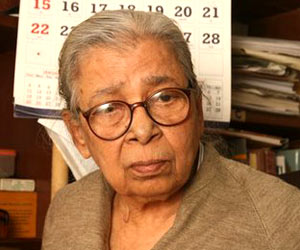
Mahasweta Devi

Mahasweta DeviBorn - 1926
Achievements - Mahasweta Devi is an eminent Indian Bengali writer, who has been studying and writing incessantly about the life and struggles faced by the tribal communities in the states like Bihar, West Bengal, Madhya Pradesh and Chhattisgarh.

Mahasweta Devi is a reputed Indian writer who was born in the year 1926 into a middle class Bengali family at Dacca, which is located in present day Bangladesh. She received her education from the prestigious Shantiniketan set up by great Indian philosopher and thinker, Rabindranath Tagore that went on to become a part of the Visva Bharti University later on. Mahasweta Devi graduated from the University of Calcutta and this was followed by an MA degree in English from the Visva Bharti University.

Read on to know more about the biography of Mahasweta Devi. Since her entire family had shifted to India by now, Devi began teaching at the Bijoygarh College in 1964. In those times, this particular college was a forum operating for elite female students. This phase was also utilized by Mahasweta Devi to work as a journalist and a creative writer. Of late, Mahasweta Devi is known to have been studying the life history of rural tribal communities in the Indian state of West Bengal and also women and dalits.

Mahasweta Devi is a social activist who has wholly involved herself to work for the struggles of the tribal people in states like Bihar, Madhya Pradesh and Chhattisgarh. In the fiction themed on Bengal which Devi writes, she often narrates the brutal oppression faced by the tribal people at the hands of the powerful upper caste persons comprising landlords, money lenders and government officials in this belt.

During the 2006 Frankfurt Book Fair when India happened to be the first country to have been invited to this fair for a second time, Mahasweta Devi made a very touching inaugural speech which moved many among the listeners to tears. Inspired by the famous Raj Kapoor song, she said: "This is truly the age where the Joota (shoe) is Japani (Japanese), Patloon (pants) is Englistani (British), the Topi (hat) is Roosi (Russian), But the Dil (heart) is always Hindustani (Indian)"

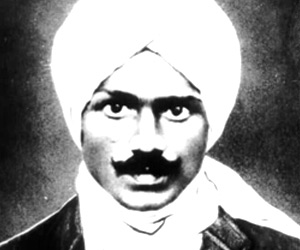
Subramanya Bharathi

Subramanya BharathiBorn - 11 December 1882
Died - 11 September 1921
Achievements - Subramanya Bharathi was a Tamil poet, reformer and freedom fighter during the pre-independence era. His used the adeptness at poetry to the best of his ability to coax the masses in the south to join the great Indian struggle for independence. Bharathi's name is counted amongst the most celebrated bards of the country.

Subramanya Bharathi was a Tamil poet, reformer and freedom fighter during the pre-independence era. Also referred to by the name of Mahakavi Bharathiyar meaning Great Poet of Tamil, Bharathi's name is counted amongst the most celebrated bards of the country. He was an expert at both prose and poetry and used these to the best of his ability to coax the masses in the south to join the great Indian struggle for independence. His time was the most eventful one in the history of India and his contemporaries included the likes of Mahatma Gandhi, Bal Gangadhar Tilak, Sri Aurobindo and V.V.S. Aiyar.

Read on to know more about Subramanya Bharathi, who got attracted to the Hindu spirituality and nationalism during his stay at Varanasi. He attended the meeting of the All India National Congress in the year 1905 here and on his return also got the opportunity to meet Sister Nivedita, the spiritual daughter of the great Indian philosopher and thinker, Swami Vivekananda. Subramanya Bharathi felt very impressed on meeting Sister Nivedita. This phase proved to be a crucial turning point in the life history of Subramanya Bharathi.

He now began to take active interest in the affairs of the outside. As such, Subramanya Bharathi entered the sphere of journalism by joining as assistant editor of a Tamil daily 'Swadeshamitran' in 1904. In the coming time, he became the editor of a Tamil weekly 'India' and another English newspaper 'Bala Bharatham' in 1907. These newspapers not only helped to awaken the feeling of nationalism among the masses and inform about the daily affairs of the outside world, but also served to bring out the creativity of Bharathi.

Bharathi began to publish his poems regularly in these editions and the themes often delved from complex religious hymns to rousing nationalist sentiments to songs on the Russian and French revolutions. He was simultaneously against social poverty, exploitation and abuse of the downtrodden people and the British ruling over the country. Though he lived a life of utter poverty, he was always positive in his thoughts and action.

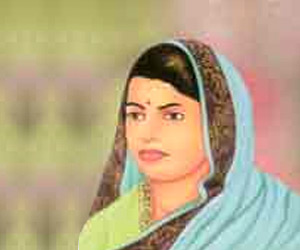
Subhadra Kumari Chauhan

Subhadra Kumari ChauhanBorn - 1904
Died - 1948
Achievements - Subhadra Kumari Chauhan was a distinguished Indian poetess, whose compositions used to be very emotionally charged. Her most well-known composition is Jhansi Ki Rani narrating the life of the brave Jhansi Ki Rani, Lakshmi Bai. Of the entire Hindi literature, it is this poem that's most recited and sung by the people of India. The government of India has named an Indian coast guard ship in her remembrance.

Subhadra Kumari Chauhan was a prominent poetess in India, whose writings used to be very emotionally charged. She was born in 1904 at the Nihalpur village in Allahabad district. But after her wedding to a Thakur Laxman Singh of Khandwa, Chauhan shifted to Jabalpur in the year 1919. Here, Subhadra Kumari Chauhan joined the famous non-cooperation movement launched by Mahatma Gandhi in 1921 and became the very first woman Satyagrahi in the country to court arrest at Nagpur.

Read on this biography to know more about the life history of Subhadra Kumari Chauhan. Infact, she was put behind the bar twice because she dared to raise her voice against the British rule in India. Chauhan has also penned a plethora of works in Hindi poetry. Her most well-known composition is Jhansi Ki Rani narrating the life of the brave Jhansi Ki Rani, Lakshmi Bai. Of the entire Hindi literature, it is this poem that's most recited and sung by the people of India. Some of her other famous poems include Veeron Ka Kaisa Ho Basant, Rakhi Ki Chunauti and Vida. These too explicitly talk about the freedom movement.

The poems and songs written by Subhadra Kumari Chauhan have served as a source of motivation for so many Indian youths to take part in the Indian independence struggle. She predominantly used the simple and clear Khariboli dialect of Hindi in her writings. Other than these, Chauhan also used to write poems for children. She has penned many short stories based on the lifestyle of the middle-class Indians. However, she died suddenly in a car accident in 1948. The government of India has named an Indian coast guard ship after her.

Nirad C. Chaudhuri

Nirad C. ChaudhuriBorn - 23 November 1897
Died - 1999
Achievements - Nirad C. Chaudhuri was an eminent Bengali Indian writer and journalist. He was appointed the political speaker for the Calcutta branch of the All India Radio and has also edited several prestigious magazines. He will always be remembered for his phenomenal biography 'The Autobiography of an Unknown Indian' published in the year 1951.

Nirad C. Chaudhuri was a famous Bengali Indian writer. He was born on 23 November in 1897 at Kishoreganj located in the Mymensingh district of East Bengal of those days or today's Bangladesh. He studied at Kishorganj and then in Kolkata city. As a student of history at the Scottish Church College, Nirad C Chaudhuri topped the University of Calcutta, which was a rare distinction at that time. Read on further about the biography of Nirad C Chaudhuri.

Nirad C Chaudhuri began his career as clerk in the accounting department of the Indian Army and also started writing stories for popular magazines. His first article on Bengali poet, Bharat Chandra was published in Modern Review, a popular English magazine of those times. After this, he entered the field of journalism and began editing various magazines. Nirad C Chaudhuri also temporarily introduced two highly esteemed Bengali magazines, Samasamayik and Notun Patrika.

Finally in the year 1938, Nirad bagged a job as the secretary to the great Indian political leader, Sarat Chandra Bose. Due to this, he got ample opportunity to meet various renowned leaders of India like Mahatma Gandhi, Jawaharlal Nehru and others. In the year 1932, Nirad C Chaudhuri married Amiya Dhar who was herself a very prolific writer. Later on, Nirad C Chaudhuri was elected as a political speaker for the Calcutta branch of the All India Radio.

Writing was Nirad C Chaudhuri's innate passion and he pursued this until the very end. His last work was published at the age of 99. Nirad will always be remembered for his phenomenal biography 'The Autobiography of an Unknown Indian' published in the year 1951. It put him directly on the short list of great Indian English writers of those days. The book traces the height of the British Raj in India till its eventual dissolution. He died at Oxford in England two months short of his 102nd birthday in the year 1999.

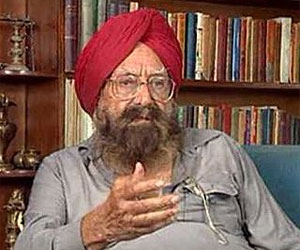
Khushwant Singh

Khushwant SinghBorn - 2 February 1915
Achievements - A significant post-colonial writer in the English language, Khushwant Singh is known for his clear-cut secularism, wit and a deep passion for poetry. A regular contributor to various national dailies, Singh is also famous for his novel 'Train to Pakistan penned in the year 1956.

Khushwant Singh is a senior prominent Indian novelist cum journalist. He was born on 2 February 1915 at Hadali in British India that is now a part of Punjab in Pakistan. A significant post-colonial writer in the English language, Khushwant Singh is known for his clear-cut secularism, humor and a deep passion for poetry. His assessment and comparison of social and behavioral traits of people from India and the West is full of outstanding wit. Here's more information on the biography of Khushwant Singh.

Infact, Khuswant Singh's writing is so popular that his weekly newspaper column, "With Malice towards One and All", published in many Indian national dailies is among the most widely-read commentaries in the country. Singh completed his bachelor's from the Government College at Lahore and thereafter, pursued further studies in law at King's College in London, UK. Sir Sobha Singh, Khushwant Singh's father, then used to work at a reputed builder in Lutyens' Delhi. Read on about life history of Khuswant Singh.

Once while still practicing as a lawyer in the High Court of Lahore, Khushwant Singh was on his way to his family's summer residence at Kasauli at the foothills of the Himalayas. It was just days prior to the partition of India and Pakistan in August 1947. Singh was driving his car when he came across a jeep full of Sikhs on an unusually vacant road that day. The Sikh men pridefully narrated to him how they had just butchered away all residents of a Muslim village.

All these instances found vivid description in the book 'Train to Pakistan' Khushwant Singh later wrote in 1956. In the time to come, Singh was appointed to edit Yojana, a journal published by the Indian government. Other publications whose editing Singh was encharged with were the Illustrated Weekly of India, a newsweekly and two other major Indian dailies - The National Herald and the Hindustan Times. Under his leadership, The Illustrated Weekly came to be hailed as India's pre-eminent newsweekly.

There's many other kudos bagged by Khushwant Singh. For instance, Singh was a Rajya Sabha member of the Indian parliament from 1980 to 1986. He was also honored with the Padma Bhushan award in the year 1974 for service to his country, but he returned the award in protest against the siege of the Golden Temple by the Indian Army in 1984. Undeterred, the Indian government awarded Singh an even more prestigious honor, the Padma Vibhushan in the year 2007.

Shobha De

Shobha De 


Shobha De is an eminent Indian novelist, who is often known as India's Jackie Collins. She was born as Shobha Rajadhyaksha to the Saraswat Brahmin family of Maharashtra on the January 7, 1947. She completed her graduation from St. Xavier's College, Mumbai and obtained degree in Psychology. In this article, we will present you with the biography of Shobha De, a well known Indian writer.

In the beginning of her career, she worked as a model and made a name for herself. Thereafter, she thought of changing her profession. Then, she pursued her career in Journalism. She brought out three magazines namely Stardust, Society, and Celebrity. Presently, she is working as a freelance writer for a couple of newspapers and magazines. To know the complete life history of Shobha Dey, read on.

These days, she is staying with her second husband Dilip De along with their children in one of the posh colonies of Mumbai. Most of her writings focus on different aspects of urban India. The erotic matter that she has written in the past has become the subject of controversy. She has also been actively involved in writing scripts for various TV soaps like Swabhimaan.

At present, she is working as a columnist and writes for a fortnight magazine "The Week". In this periodical, she writes on varied issues concerning the society. She speaks her mind in her writings. She often expresses her dissatisfaction with respect to the behavior exhibited by the present day generation. Many a times, she has been held responsible for accelerating the pace and bringing about a sexual revolution through her writings in the column "The Sexes" of the magazine "The Week". She has also written a couple of erotic novels.

Notable Works of Shobha De
Starry Nights
Socialite Evenings
Sultry Days
Sisters
Small betrayals
Second Thoughts
Surviving Men
Spouse
Snapshots
Selective Memory

Shashi Deshpande

Shashi Deshpande 


Shashi Deshpande is a well known name in the field of Indian literature. She was born in Dharwad in Karnataka as the daughter of the renowned Kannada dramatist as well as a great Sanskrit scholar Sriranga. She pursued her education in Dharwad, Bombay and Bangalore. Well, in this article, we will present you with the biography of Shashi Deshpande.

Life History
Shashi Deshpande had a very sharp mind. She received degrees in Economics and Law. Infact, she was a gold medalist. After getting married, she shifted to Bombay (now Mumbai). During her stay in Mumbai, she decided to pursue a course in Journalism. So, she got herself enrolled in the Bharatiya Vidya Bhavan. Thereafter, she took up a job as a journalist in the magazine "Onlooker". She worked there for a couple of months. Read on to know the complete life history of Shashi Deshpande.

While working in the magazine, she began writing and the first short story that she wrote got published in 1970. Her short stories headed their way in popular magazines like Femina, Eve's Weekly etc. Her maiden collection of short stories was published under the title "Legacy" in the year 1978. Her first novel, "The Dark Holds No Terrors" was published in 1980.

She had written a novel titled "That Long Silence", which brought her lot of praise and appreciation. Infact, for her fabulous work in this novel, she received the Sahitaya Akademi Award and Nanjangud Thirumalamba award. She has been actively involved in writing books for children.

Notable Works of Shashi Deshpande
The Binding Vine
Matter of Time
That Long Silence
Dark Holds No Terrors

Mahadevi Varma

Mahadevi Varma 


She is a well known Hindi poet of the Chhayavaad generation, the times when every poet used to incorporate romanticism in their poetry. She is more often called the modern Meera. Well, we are talking about the famous Mahadevi Varma, who achieved the Jnanpith award in the year 1982. In this article, we will present you with the biography of Mahadevi Varma, so read on.

Life History
Mahadevi was born in the family of lawyers in 1907 in Farrukhabad, Uttar Pradesh. She completed her education in Jabalpur, Madhya Pradesh. At a young age of nine in the year 1914, she was married to Dr Swarup Narain Varma. She lived with her parents till the time her husband completed his studies in Lucknow. It is during this period that, Mahadevi pursued further education at the Allahabad University. She did her masters in Sanskrit from there.

She met her husband for sometime in the princely state of Tamkoi somewhere around 1920. Thereafter, she moved to Allahabad to further her interest in poetry. Unfortunately, she and her husband mostly lived separately and were busy pursuing their individual interests. They used to meet occasionally. Her husband died in the year 1966. Then, she decided to permanently shift to Allahabad.

She was highly influenced by the values preached by the Buddhist culture. She was so much inclined towards Buddhism that, she even attempted to become a Buddhist bhikshuni. With the establishment of Allahabad (Prayag) Mahila Vidyapeeth, which was primarily set up to impart cultural values to girls, she became the first headmistress of the institute. This famous personality died in 1987.

Writings
Mahadevi Varma is one amongst the other major poets of the Chhayavaadi school of the Hindi literature. She is the epitome of child prodigy. Not only she wrote fabulous poetry, but also made sketches for her poetic works such as Deepshikha and Yatra. Deepshikha is one of the best works of Mahadevi Varma. She is also famous for her book of memoirs.

Notable Works of Mahadevi Varma

Prose
Ateet Ke chalchitra
Kshanda'
Mera Parivaar
Path ke Saathi
Sahityakaar ki Asatha
Sambhashan
Sankalpita
Shrinkhla ki kadiya
Smriti Ki Rekhayen

Poetry
Deepshikha
Himalaya
Neerja
Nihar
Rashmi
Saandhya geet
Saptaparna

Collection
Geetparva
Mahadevi sahitya
Parikrama
Sandhini
Smarika
Smritichitra
Yama

Honors
Her writings were well acclaimed and earned her an important position in the world of Hindi literature. She is believed to be one of the supporting pillars of the Chaayavad movement. Her amazing poetry collection Yama brought her the Gyanpeeth award (1940), the highest Indian literary award. In the year 1956, the Government of India honored her by conferring the title of Padma Bhushan upon her. She was the first Indian woman to become a Fellow of the Sahitya Akademi in the year 1979.

Kiran Desai

Kiran Desai 


Daughter of a well known Indian author, she is the winner of the 2006 Booker prize. Well, we are talking about the eminent Indian novelist Kiran Desai. She was born on the 3rd of September in the year 1971 in Chandigarh. She spent the early years of her life in Pune and Mumbai. She studied in the Cathedral and John Connon School. In this article, we will present you with the biography of Kiran Desai.

Life History
When she was around nine years old, her family shifted to Delhi. By the time, she turned fourteen, the family moved to England. A year later, they shifted to the United States. Kiran completed her schooling in Massachusetts. She did her graduation from Hollins University and Columbia University. Thereafter, she took a break of two years to write her first book "Hullabaloo in the Guava Orchard".

Career
Her maiden novel "Hullabaloo in the Guava Orchard" was published in the year 1998. It was an amazing piece of work, for which Kiran received many accolades. Her second book "The Inheritance of Loss" was also well acclaimed. She also received the 2006 Man Booker Prize and 2006 National Book Critics Circle Fiction Award for it.

V.S. Naipaul

V.S. Naipaul Born: August 17, 1932
Achievement: Won Nobel Prize in Literature in 2001; Won the Booker Prize in 1971 and became the first person of Indian origin do so.

V.S. Naipaul is a noble laureate who won Nobel Prize in Literature in 2001. Though of Indian origin, V.S. Naipaul was born in Trinidad and is currently a British citizen.

V.S. Naipaul (Sir Vidiadhar Surajprasad Naipaul) was born on August 17, 1932, at Chaguanas, Trinidad and Tobago. His forefathers came as indentured labourers from India. Naipaul's upbringing familiarised him with every sort of deprivation, material and cultural. He got a scholarship to Oxford University and thus came to England. It was at Oxford that V.S. Naipaul discovered the writer in him.

V.S. Naipaul traveled extensively in India and Africa. At that time decolonisation was taking place and Sir V.S. Naipaul observed from close quarters the resulting turmoil of emotions. These observations were reflected in his writings. V.S. Naipaul has written about slavery, revolution, guerrillas, corrupt politicians, the poor and the oppressed, interpreting the rages so deeply rooted in our societies.

V.S. Naipaul's fiction and especially his travel writing have been criticised for their allegedly unsympathetic portrayal of the Third World. But his supporters argue that he is actually an advocate for a more realistic development of the Third World. V.S. Naipaul's contempt for many aspects of liberal orthodoxy is uncompromising, but at the same time he has exhibited an open-mindedness toward some Third World leaders and cultures that isn't found in western writers.

V.S. Naipaul has discussed Islam in several of his books and he has been criticised for harping on negative aspects of Islam. V.S. Naipaul's support for Hindutva has also been controversial. He has been quoted describing the destruction of the Babri Mosque as a "creative passion", and the invasion of Babur in the 16th century as a "mortal wound."

V.S. Naipaul has won several awards and honors for his writings. In 1971, Naipaul won the Booker Prize for his book "In a Free State" and became the first person of Indian origin do so. He won the Jerusalem Prize in 1983 and Nobel Prize for Literature in 2001.

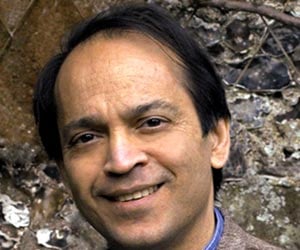
Vikram Seth

Vikram SethBorn: June 20, 1952
Achievement: Won the WH Smith Literary Award and the Commonwealth Writers Prize for his novel, A Suitable Boy. His travelogue "From Heaven Lake: Travels Through Sinkiang and Tibet" won the Thomas Cook Travel Book Award.

Vikram Seth is a famous Indian poet, novelist, travel writer, librettist, children's writer, biographer and memoirist.

Vikram Seth was born on June 20, 1952 at Kolkata. His father, Prem, was an employee of the Bata India Limited shoe company who migrated to post-Partition India from West Punjab in Pakistan. Vikram Seth's childhood was spent in the town of Batanagar near Calcutta, Patna, and London. His mother Leila Seth was the first woman judge of the Delhi High Court as well as the first woman to become Chief Justice of a state High Court. She was the Chief Justice of Shimla High Court.

Vikram Seth did his schooling from The Doon School in Dehradun. He took his undergraduate degree in philosophy, politics and economics from Oxford University. He was enrolled in postgraduate economics courses at Stanford University and was also attached to Nanjing University for his intended doctoral dissertation on Chinese population planning.

Vikram Seth's first novel, "The Golden Gate" (1986), describes the experiences of a group of friends living in California. His other novel, "A Suitable Boy" (1993) is an acclaimed epic of Indian life. The novel won the WH Smith Literary Award and the Commonwealth Writers Prize (Overall Winner, Best Book). Set in India in the early 1950s, it is the story of a young girl, Lata, and her search for a husband. "An Equal Music" (1999), is the story of a violinist haunted by the memory of a former lover.

Vikram Seth has also written a travelogue "From Heaven Lake: Travels Through Sinkiang and Tibet" (1983). The book is an account of a journey through Tibet, China and Nepal that won the Thomas Cook Travel Book Award. He also wrote a libretto, Arion and the Dolphin (1994), which was performed at the English National Opera in June 1994, with music by Alec Roth. Vikram Seth is also an accomplished poet. His works in poetry include Mappings (1980), The Humble Administrator's Garden (1985), which was a winner of the Commonwealth Poetry Prize (Asia), and All You Who Sleep Tonight (1990). Vikram Seth has written a story book for children Beastly Tales from Here and There (1992), which consists of ten stories about animals told in verse.

Vikram Seth's latest work is Two Lives (2005). The book is a memoir of the marriage of his great uncle and aunt.

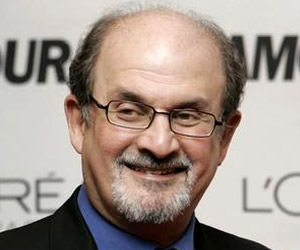
Salman Rushdie

Salman RushdieBorn: June 19, 1947
Achievement: Awarded the 'Booker of Bookers' prize in 1993 for his novel "Midnight's Children"

Salman Rushdie is one of the most famous Indian origin authors. He is best known for the violent backlash his book The Satanic Verses (1988) provoked in the Muslim community. Iranian spiritual leader Ayatollah Khomenei issued a fatwa against Salman Rushdie, calling for his assassination, forcing Rushdie to go underground.

Salman Rushdie was born in Mumbai on June 19, 1947. When Rushdie was 17 his family migrated to Pakistan. Rushdie did his schooling from Cathedral and John Connon School in Mumbai, and Rugby School in Warwickshire. Salman Rushdie did his graduation in History from King's College, Cambridge. Following an advertising career with Ayer Barker, Salman Rushdie became a full-time writer.

Salman Rushdie began his writing career began with Grimus, which was published in 1975. He gained literary fame with his second novel "Midnight's Children." The book was awarded the 'Booker of Bookers' prize in 1993 after being selected as the best novel to be awarded the Booker Prize in its first 25 years. The novel narrates key events in the history of India through fiction. His third novel "Shame", depicted the political turmoil in Pakistan with characters based on Zulfikar Ali Bhutto and General Muhammad Zia-ul-Haq. Salman Rushdie's latest novel was Shalimar The Clown. The novel was shortlisted for the 2005 Whitbread Novel Award.

Salman Rushdie has won many awards and honors. These include: Booker Prize for Fiction, James Tait Black Memorial Prize (Fiction), Arts Council Writers' Award, "Booker of Bookers" or the best novel among the Booker Prize winners for Fiction, and Writers' Guild Award.

R.K. Narayan

Born: October 10, 1906
Died: May 13, 2001
Achievement: Felicitated with Sahitya Akademi Award and Padma Bhushan.

R.K. Narayan is one of the most famous and widely read Indian novelists. His stories were grounded in a compassionate humanism and celebrated the humour and energy of ordinary life.

R.K. Narayan was born on October 10, 1906 in Madras. His father was a provincial head master. R.K. Narayan spent his early childhood with his maternal grandmother, Parvathi in Madras and used to spend only a few weeks each summer visiting his parents and siblings. R.K. Narayan studied for eight years at Lutheran Mission School close to his grandmother's house in Madras, also for a short time at the CRC High School. When his father was appointed headmaster of the Maharaja's High School in Mysore, R.K. Narayan moved back in with his parents. He obtained his bachelor's degree from the University of Mysore.

R.K. Narayan began his writing career with Swami and Friends in 1935. Most of his work including Swami and friends is set in the fictional town of Malgudi which captures everything Indian while having a unique identity of its own. R.K. Narayan's writing style was marked by simplicity and subtle humour. He told stories of ordinary people trying to live their simple lives in a changing world.

R.K. Narayan's famous works include The Bachelor of Arts (1937), The Dark Room (1938), The English Teacher (1945), The Financial Expert (1952), The Guide (1958), The Man-Eater of Malgudi (1961), The Vendor of Sweets (1967), Malgudi Days (1982), and The Grandmother's Tale (1993).

R.K. Narayan won numerous awards and honors for his works. These include: Sahitya Akademi Award for The Guide in 1958; Padma Bhushan in 1964; and AC Benson Medal by the Royal Society of Literature in 1980; R.K. Narayan was elected an honorary member of the American Academy and Institute of Arts and Letters in 1982. He was nominated to the Rajya Sabha in 1989. Besides, he was also conferred honorary doctorates by the University of Mysore, Delhi University and the University of Leeds.

Mulk Raj Anand

Mulk Raj AnandBorn: December 12, 1905
Died: September 28, 2004
Achievement: Mulk Raj Anand was among the first writers to incorporate Punjabi and Hindustani idioms into English.

Mulk Raj Anand was an Indian novelist, short-story writer. He was among the first writers to incorporate Punjabi and Hindustani idioms into English. Mulk Raj Anand's stories depicted a realistic and sympathetic portrait of the poor in India.

Mulk Raj Anand was born on December 12, 1905 in Peshawar. He graduated with honors from Khalsa College, Amritsar in 1924. Mulk Raj Anand went to England and studied at University College London and Cambridge University. He completed his PhD in 1929. Mulk Raj Anand also studied - and later lectured - at League of Nations School of Intellectual Cooperation in Geneva. Between 1932 and 1945 he lectured intermittently at Workes Educational Association in London.

Mulk Raj Anand was initiated into the literary career by a family tragedy, instigated by the rigidity of the caste system. Anand's first prose essay was a response to the suicide of an aunt, who had been excommunicated by his family for sharing a meal with a Muslim. Mulk Raj Anand's first novel, "Untouchable", (1935), was a stark reflection of the day-to-day life of a member of India's untouchable caste. The book was widely acclaimed and Mulk Raj Anand was hailed as India's Charles Dickens. His second novel "Coolie" depicts the plight of India's poor through the story of a 15-year-old boy, trapped in servitude as a child labourer, who eventually dies of tuberculosis.

In the 1930s and 1940s Mulk Raj Anand divided his time between London and India. He joined the struggle for independence, but also fought with the Republicans in the Spanish Civil War. After the war Anand returned permanently to India and settled in Bombay. In 1946 he founded the fine-arts magazine Marg. He also became a director of Kutub Publishers. From 1948 to 1966 Anand taught at Indian universities. Mulk Raj Anand was fine art chairman at Lalit Kala Akademi (National Academy of Arts from 1965 to 1970. In 1970, he became president of Lokayata Trust, for creating a community and cultural center in the village of Hauz Khas, New Delhi.

Mulk Raj Anand died on September 28, 2004.